
April 2025 By Dee Lackey
When Elmer Kelton—San Angelo’s most awarded novelist and well-known citizen—died August 22, 2009, my husband Jerry and I were deeply saddened as were his family, friends and the Western literary world.
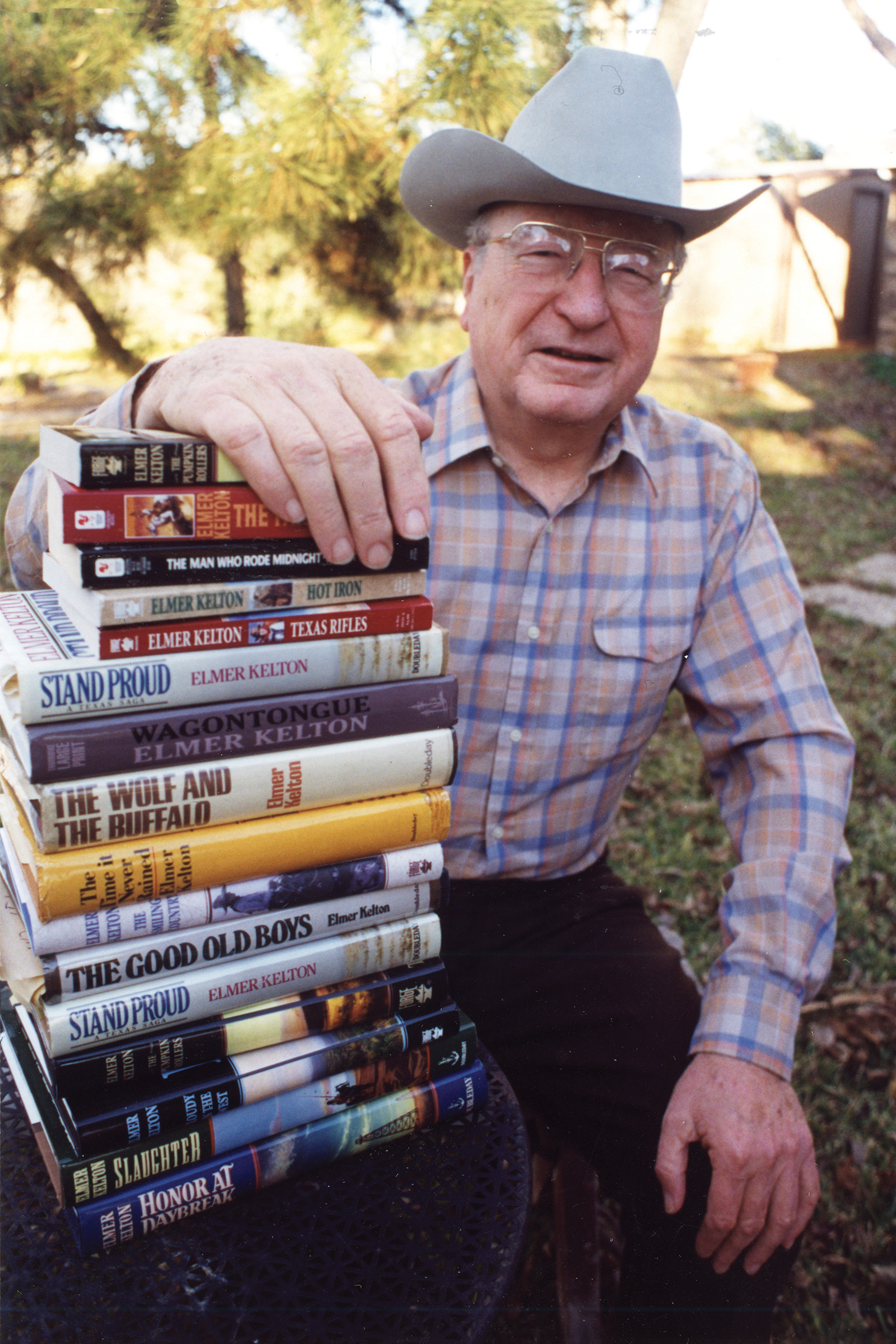
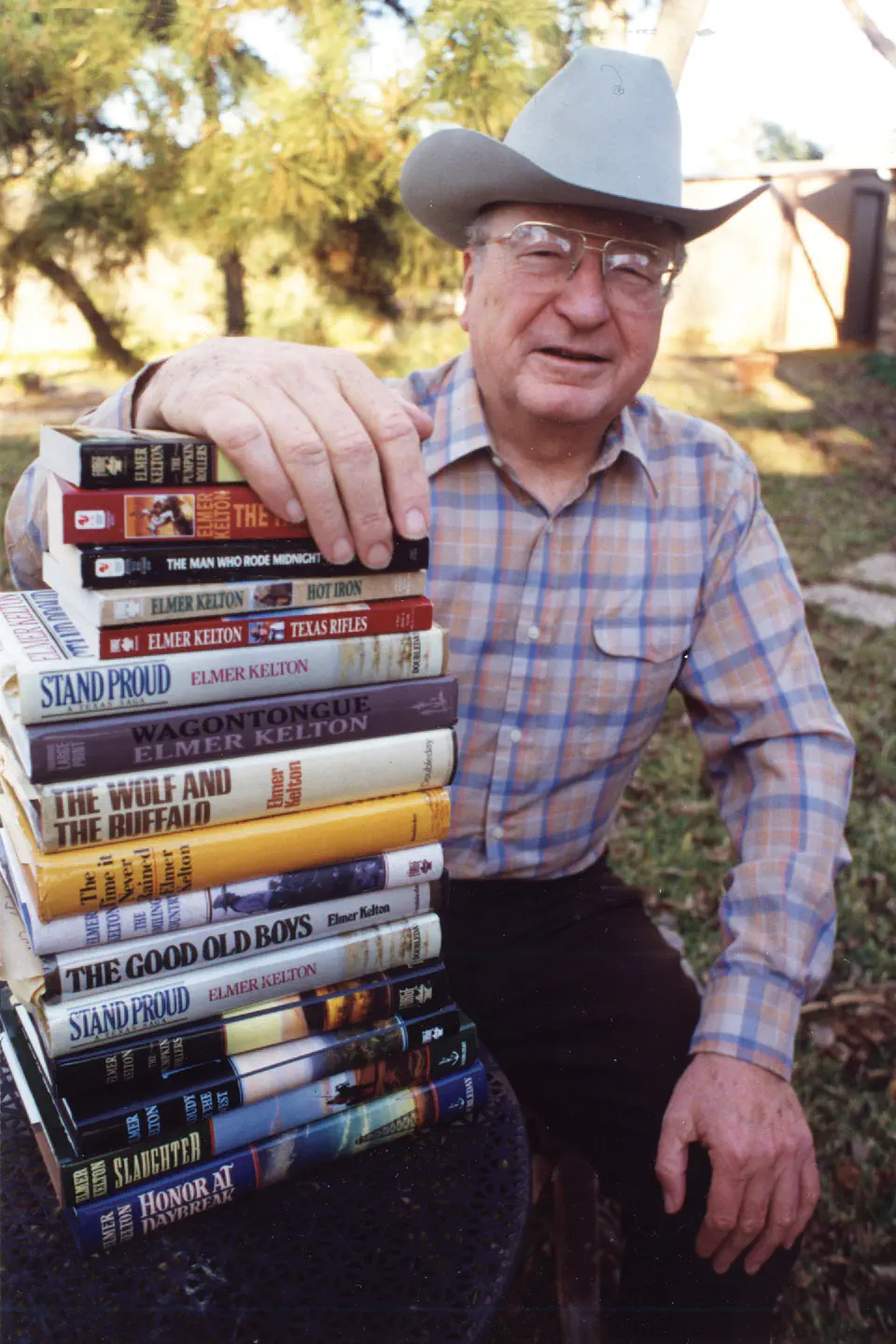
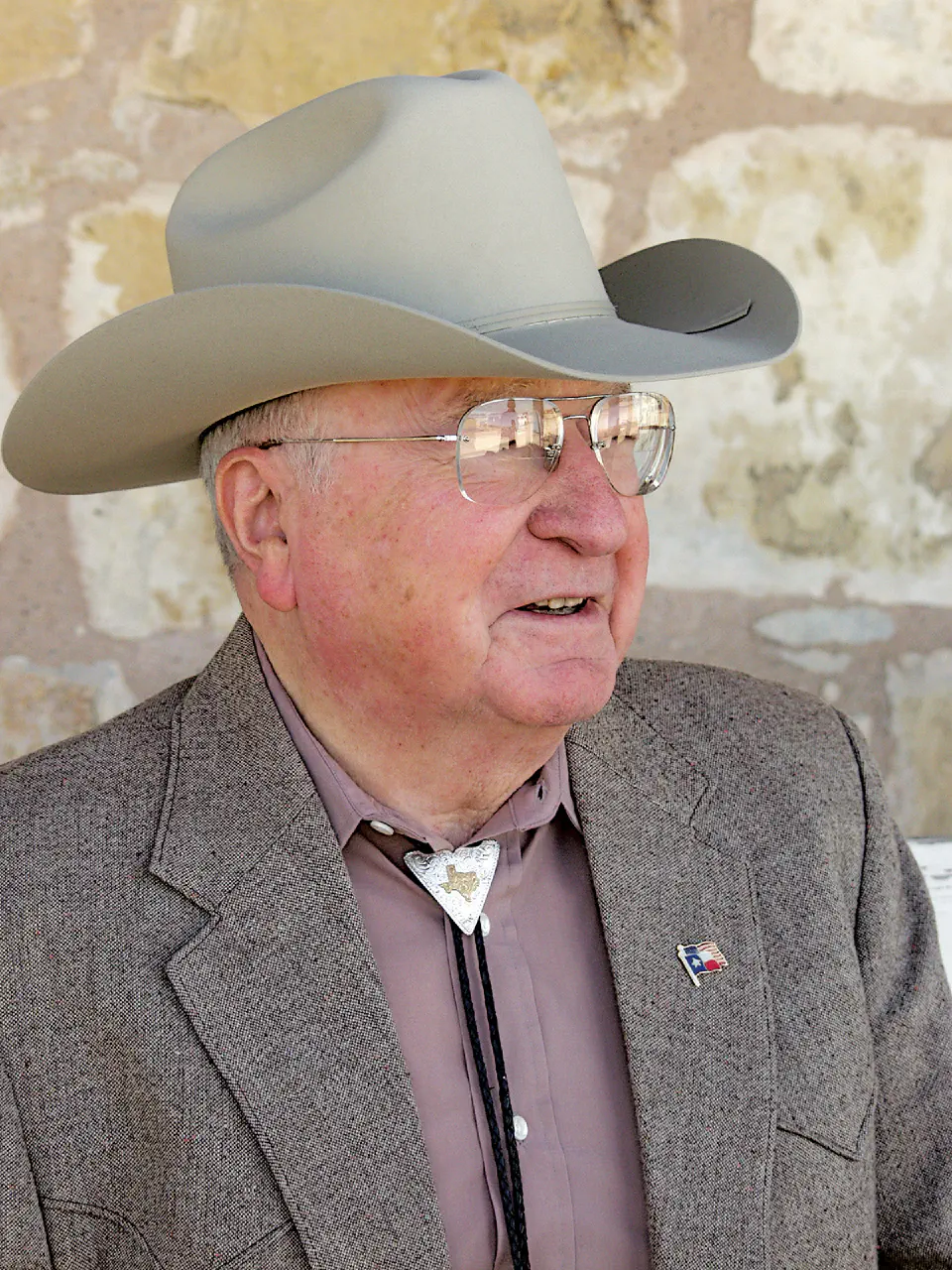
Elmer Kelton poses with a stack of some of the many novels he has written. Photo by Scott Campbell.
Although we knew he was trying to recover from recent health issues, the announcement still caught us off guard. Jerry had worked with Elmer at the San Angelo Standard-Times and succeeded him as editor of the Sheep & Goat Raiser magazine in 1968.
Our paths crossed often and our friendship strengthened. We were even lucky enough to be the recipients of his wife Ann’s delicious German pastries! Kelton’s pastor, the Rev. Ricky Burk at First United Methodist Church, eloquently said during the memorial service that “Elmer the man was as beloved as his books.” Truly, he was one of the most humble, unassuming notable persons we may have ever known.
However, the reason behind this article is to acknowledge the upcoming 100th anniversary of Kelton’s birth which occurs in April, 2026 and to revisit parts of Elmer’s own story, some of his popular characters and his legacy to his family and his readers.
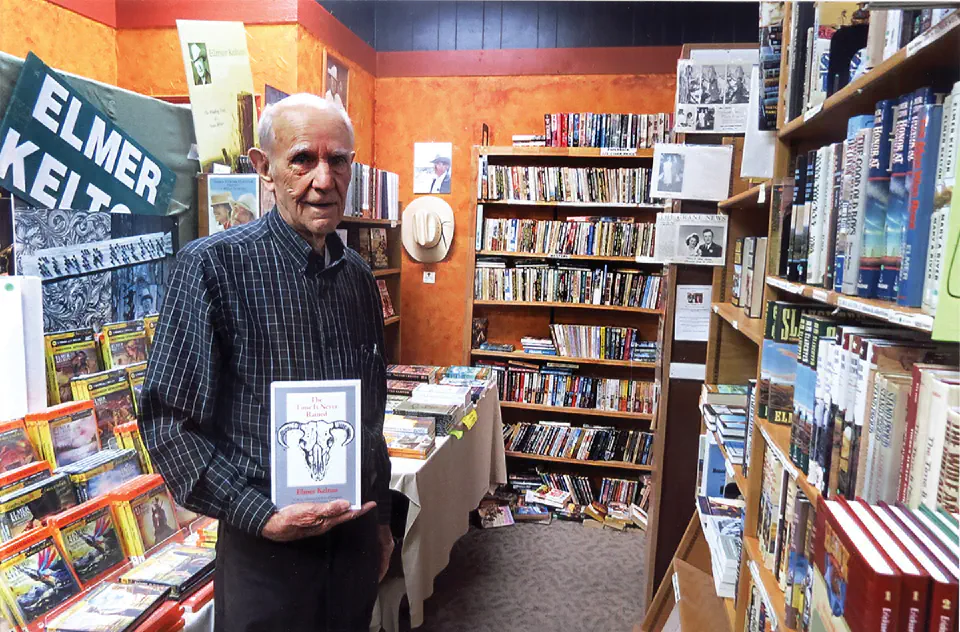
Among Elmer’s closest friends was San Angelo book shop owner Felton Cochran who undoubtedly has the largest selection of Kelton’s 40 novels plus some assorted memorabilia at his Cactus Book Shop.
“Those who’ve never read Kelton’s books ask if they’re like Louis L’Amour’s? They aren’t. Elmer didn’t write Westerns —he wrote Western literature,” Cochran explained. “When you open a Kelton novel, you know it will be clean, entertaining and historically accurate. It sounds simple, but his writing was so much more.”
While Elmer would never be the cowboy his dad Buck hoped he would be, he was blessed to be raised around cowhands. He listened to their stories and learned with the help of his teacher/mother Bea and journalism mentors Paul Patterson and J. Frank Dobie how to weave words into characters and locales readers loved.
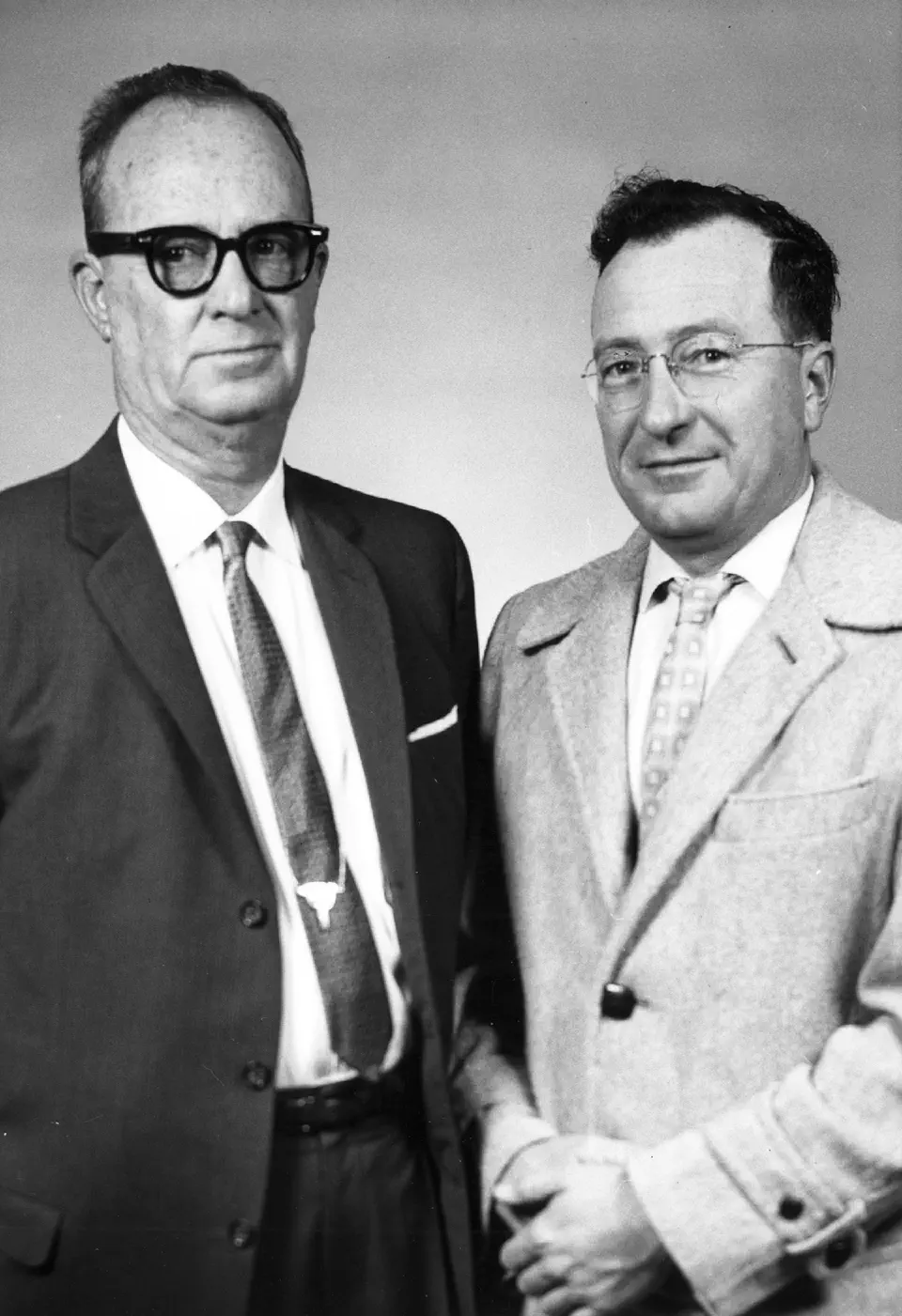
Al-Sledge-and-ElmerKelton_TSGRAConvention_FtWorth_Dec1961_gs.jpg

Book recommended by Brenda Sedeinsticker and Brent Smith__IMG_0584.jpg
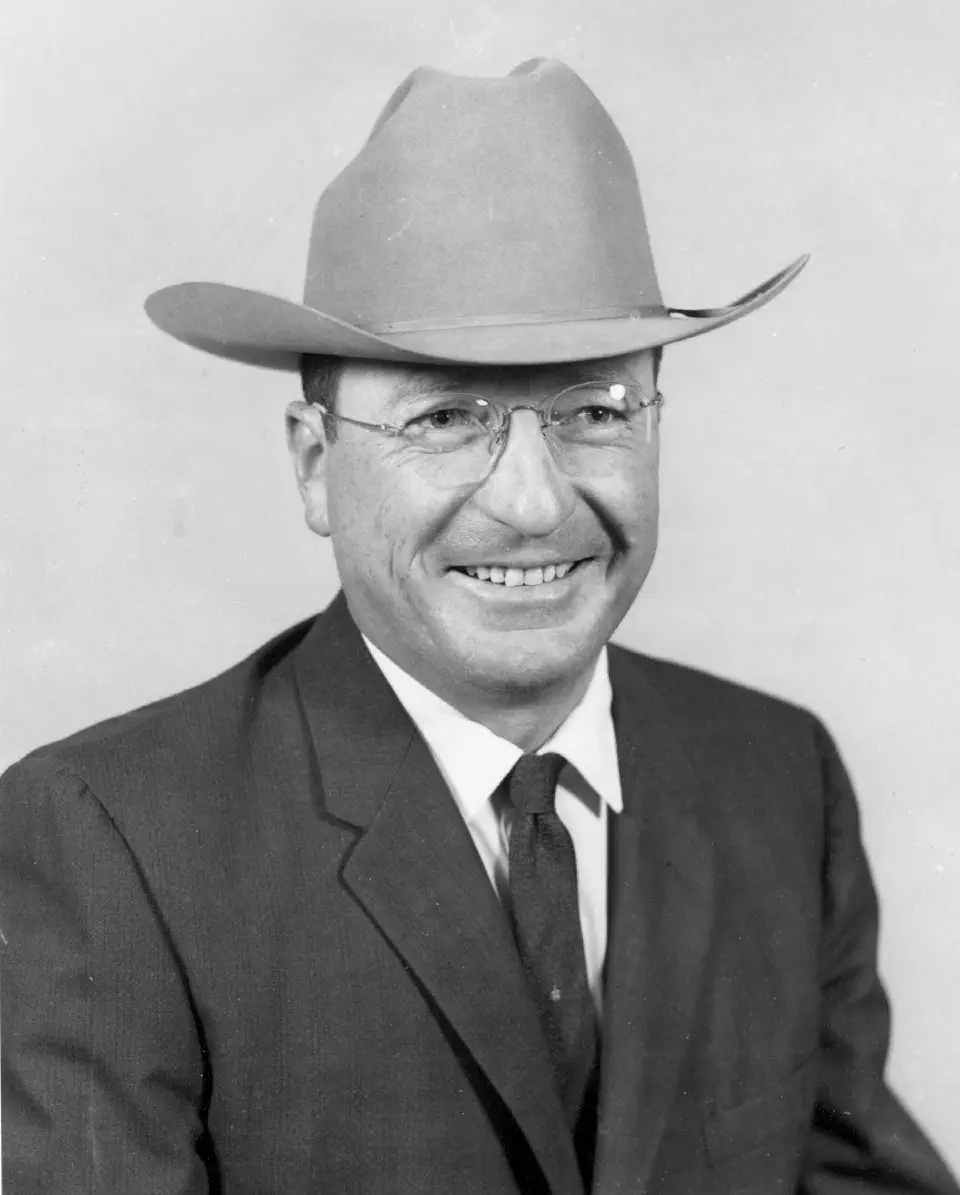
ElmerKelton_columnPhoto_SGRmag_gs.jpg
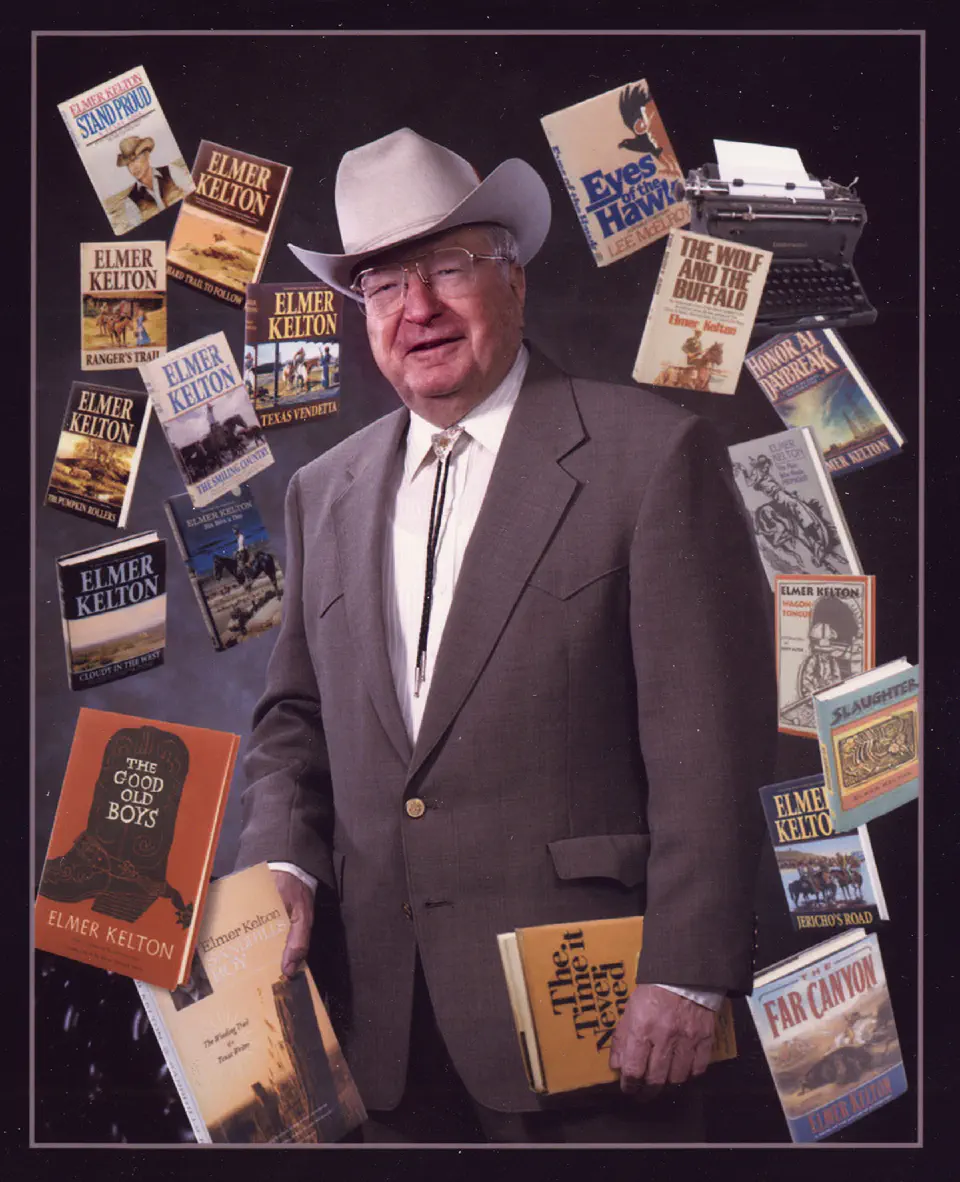
ElmerKelton_with_books_cmyk.jpg
Elmer_and_books_from_photo.jpg
Kelton_byScottCampbell_atFtConcho_2005_cmyk.jpg
True-to-Union_monument_IMG_9187_cmyk.jpg
cactus_books_cmyk.jpg
card.jpg
featured-image.jpg
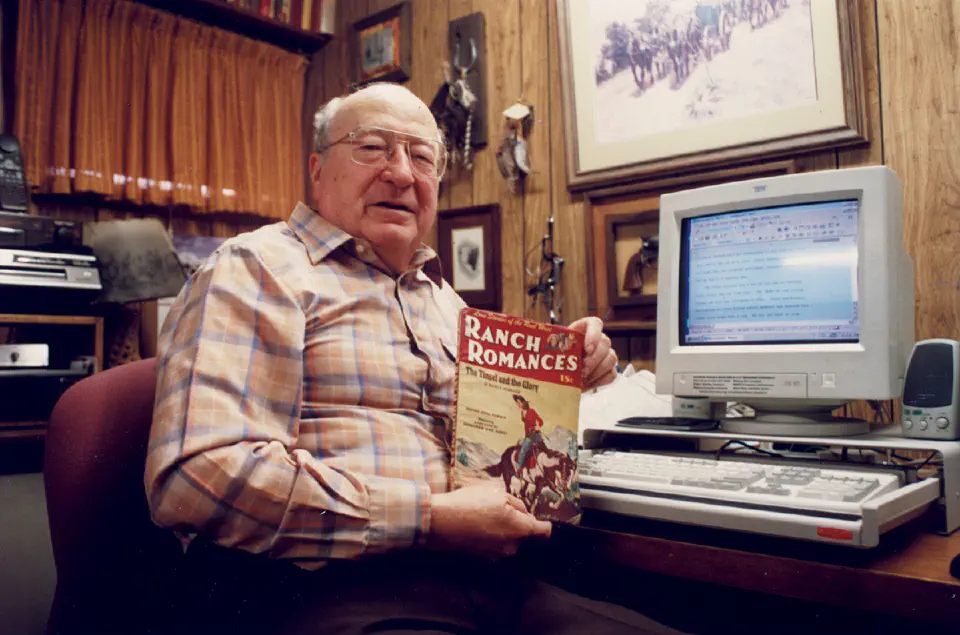
Born April 29, 1926, at Horse Camp in Andrews County, Elmer grew up on the McElroy Ranch in Upton and Crane counties where his dad was the ranch manager. Although nearsighted and small in stature, Elmer was fascinated with the tales told by the cowboys who lived in the late 1800s and early 1900s. He absorbed the stories in the publication Ranch Romances that his mother read, and he worked hard to replicate them. He soon learned writing a 20,000-word book would pay better than a 5,000-word short story.
Kelton often reminisced how elated he was when his first hard-back book, “The Day the Cowboys Quit,” was published in 1972. His first published books like “Hot Iron” and “Horsehead Crossing” were paperbacks.
Among my fondest remembrances was Elmer’s love story with his fraulein Anni Lipp. The chance meeting between a young woman in Ebensee, Austria, and the homesick World War II soldier surely involved God’s hand at work.
Hesitant to engage in conversation, Anni soon saw the gentleness in Elmer’s blue eyes and his constant hunger for her apple strudel! Elmer eventually met her family, but when he was discharged and sent back to the states, Anni wasn’t sure he’d be true to his word to send for her and her young son.
In spite of mounds of red tape, many long months and lots of exchanged letters, he finally was able to send for Anni and Gerhardt (whose name became Gary). After their arrival by boat in New York City, Elmer and his mom drove his soon-to-be-bride to Texas.
Having lived in the Austrian Alps all her life, Anni thought when they arrived in far West Texas that “she had reached the jumping-off place to hell!” They were married in July 1947—and the dust and heat would remain a lifelong issue. But Anni loved her husband and family—later including son Steve and daughter Kathy and loving grandchildren.
After graduating from the University of Texas at Austin in 1948, Kelton began working for the San Angelo Standard-Times where he would write the Top of the Windmill column and notably cover the farm and ranch bracero worker program and the Billy Sol Estes fertilizer tank scandal.
Fifteen years later Elmer became editor of the Texas Sheep & Goat Raisers’ Association’s magazine Sheep & Goat Raiser (which later became this magazine) before taking a long-term editorial position for the Frank family at the Livestock Weekly.
By 1990 Elmer had worked four decades in agriculture journalism by day and had written 30 novels in the evenings and weekends—including one of his most well-known books, “The Time It Never Rained.”
His biography, “Sandhills Boy: The Winding Trail of a Texas Writer,” was published in 2007. His inscription to us read: “To Dee and Jerry who lived through some of this with us!”
Next month we’ll review several of Kelton’s top honors including the life-sized bronze statue and downtown mural, a few favorite characters and the sly humor in his works … plus some recommended reading.